Clutch won’t fully disengage

So working on my 2008 BDM I can put the bike in and out of gear but when I throw her into first the bike walks forward when I let go of the clutch. The issue is I can fully let the clutch go, the bike won’t stall but will walk forward and when I apply the throttle nothing happens it’s as if the bike can’t get the power almost as if the clutch is still being applied. I’ve gone through the process over days of loosening the clutch rod tightening it with the Allen wrench then backing off going and trying the clutch lever. When the lever is pulled I see the plates in the primary push in and out just fine. I’m truly stuck on what to do next any ideas?!?!?!
 

Sven

Well-Known Member
Where is the pressure plate in proportion to it sinking into the big clutch outer? It's called stack. Stack pushes the springs tighter. Worn clutch, springs expand, and/or wave plate goes back to static memory and looks curved. Where if properly stacked, the wave plate would look flat, and that full pressure design.
 

SKOGDOG

One of the old ones.
After exhausting clutch adjustment techniques/advice, you can look at 3 areas in the clutch that influence clutch slippage.
First is the stack height of the clutch pack (all the plates—as Sven says)—Stack height should be 1.97” (some say 1.96). Get ‘em at HDM or Energy one. Measure the stack height of all steel and friction discs. If it’s 1.95 or below, you best replace the discs. Good practice to get both fiber and steel discs, because as Sven points out, a bent steel disc will cause clutch slippage.
Second is the pressure plate-if you’ve pulled the primary and the clutch parts, look at the color of the pressure plate. The aluminum ones are shiny aluminum, and are soft —the anodized ones are anodized and harder— dark grey in color. You want the hardened anodized type. Available from HDM Inc. Check the backside where the friction plate contacts it—if there is a ridge on the outer edge, replace the pressure plate with the anodized version.
Third is the pressure plate. Baker is the only source I know of, although I saw HDM has some deals to buy the both plates and diaphragm disc spring. Put it on a flat surface and measure the distance from each of the ‘fingers’ to the table. OEM springs are usually about .32” using my caliper. If there is a lot of variation, replace the spring. The new Baker ‘stronger’ spring is only .24-.25”, but it’s a thicker spring, hence more tension.

 

Jersey Big Mike

100K mile club
After exhausting clutch adjustment techniques/advice, you can look at 3 areas in the clutch that influence clutch slippage.
First is the stack height of the clutch pack (all the plates—as Sven says)—Stack height should be 1.97” (some say 1.96). Get ‘em at HDM or Energy one. Measure the stack height of all steel and friction discs. If it’s 1.95 or below, you best replace the discs. Good practice to get both fiber and steel discs, because as Sven points out, a bent steel disc will cause clutch slippage.
Second is the pressure plate-if you’ve pulled the primary and the clutch parts, look at the color of the pressure plate. The aluminum ones are shiny aluminum, and are soft —the anodized ones are anodized and harder— dark grey in color. You want the hardened anodized type. Available from HDM Inc. Check the backside where the friction plate contacts it—if there is a ridge on the outer edge, replace the pressure plate with the anodized version.
Third is the pressure plate. Baker is the only source I know of, although I saw HDM has some deals to buy the both plates and diaphragm disc spring. Put it on a flat surface and measure the distance from each of the ‘fingers’ to the table. OEM springs are usually about .32” using my caliper. If there is a lot of variation, replace the spring. The new Baker ‘stronger’ spring is only .24-.25”, but it’s a thicker spring, hence more tension.
Bandit still makes an entire clutch setup for BDM's as far as I know (some parts are interchangeable not all) Bandit Machine Works, lancaster PA.
 
Where is the pressure plate in proportion to it sinking into the big clutch outer? It's called stack. Stack pushes the springs tighter. Worn clutch, springs expand, and/or wave plate goes back to static memory and looks curved. Where if properly stacked, the wave plate would look flat, and that full pressure design.
Where are the clutch springs located? I’ve also seen people talk about the ball and ramp assembly I think that might be my next tackle.
 
After exhausting clutch adjustment techniques/advice, you can look at 3 areas in the clutch that influence clutch slippage.
First is the stack height of the clutch pack (all the plates—as Sven says)—Stack height should be 1.97” (some say 1.96). Get ‘em at HDM or Energy one. Measure the stack height of all steel and friction discs. If it’s 1.95 or below, you best replace the discs. Good practice to get both fiber and steel discs, because as Sven points out, a bent steel disc will cause clutch slippage.
Second is the pressure plate-if you’ve pulled the primary and the clutch parts, look at the color of the pressure plate. The aluminum ones are shiny aluminum, and are soft —the anodized ones are anodized and harder— dark grey in color. You want the hardened anodized type. Available from HDM Inc. Check the backside where the friction plate contacts it—if there is a ridge on the outer edge, replace the pressure plate with the anodized version.
Third is the pressure plate. Baker is the only source I know of, although I saw HDM has some deals to buy the both plates and diaphragm disc spring. Put it on a flat surface and measure the distance from each of the ‘fingers’ to the table. OEM springs are usually about .32” using my caliper. If there is a lot of variation, replace the spring. The new Baker ‘stronger’ spring is only .24-.25”, but it’s a thicker spring, hence more tension.
Where are the springs?
 

HMAN

I just like my Freedom
Supporting Member
Have you checked the throwout bearing? And/or ball and ramp?
 

SKOGDOG

One of the old ones.
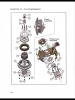
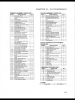
refer to the schematic below—the throwout bearing (#12) is actually located in the center of the pressure plate (#17). Held in place by a horseshoe clip (#11). It’s pushed outward by the pushrod when you pull the clutch lever. That movement compresses the spring and spreads the clutch plates apart so you can shift gears and find neutral….the spring itself is a convex disc diaphragm spring (#15) made of spring steel. Again, look at the schematic and you’ll see.IMG_0167.pngIMG_0168.png
 
refer to the schematic below—the throwout bearing (#12) is actually located in the center of the pressure plate (#17). Held in place by a horseshoe clip (#11). It’s pushed outward by the pushrod when you pull the clutch lever. That movement compresses the spring and spreads the clutch plates apart so you can shift gears and find neutral….the spring itself is a convex disc diaphragm spring (#15) made of spring steel. Again, look at the schematic and you’ll see.View attachment 114345View attachment 114346
Thank you!!
 
Top