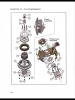
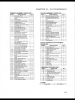
After exhausting clutch adjustment techniques/advice, you can look at 3 areas in the clutch that influence clutch slippage.
First is the stack height of the clutch pack (all the plates—as Sven says)—Stack height should be 1.97” (some say 1.96). Get ‘em at HDM or Energy one. Measure the stack height of all steel and friction discs. If it’s 1.95 or below, you best replace the discs. Good practice to get both fiber and steel discs, because as Sven points out, a bent steel disc will cause clutch slippage.
Second is the pressure plate-if you’ve pulled the primary and the clutch parts, look at the color of the pressure plate. The aluminum ones are shiny aluminum, and are soft —the anodized ones are anodized and harder— dark grey in color. You want the hardened anodized type. Available from HDM Inc. Check the backside where the friction plate contacts it—if there is a ridge on the outer edge, replace the pressure plate with the anodized version.
Third is the pressure plate. Baker is the only source I know of, although I saw HDM has some deals to buy the both plates and diaphragm disc spring. Put it on a flat surface and measure the distance from each of the ‘fingers’ to the table. OEM springs are usually about .32” using my caliper. If there is a lot of variation, replace the spring. The new Baker ‘stronger’ spring is only .24-.25”, but it’s a thicker spring, hence more tension.