
Charging System Reading
- Thread starter xxcarpxx
- Start date

Fuel Injection is mapped around the [backup/fail-safe/limp] or the penultimate pressure = 14.7p.You both are talking over my head..ha.. but do you think my Charging System is bad??
The intake stroke closes with a perfectly balanced pressure inside = 14.7p.
*The acid or that gravity scale is a storage unit with a merc weight of 12.8v = 14.7cRe.
The OXYGEN sensor (02) is trying to burn the chemRe so the air reverts back to breathable stoic = 14.7cRe.
The volt reg puts out a number in decimals, so when I see the battery sit for a few; the v/r peaks @ = 14.7v. (chmRe obviously)
I applied everything I can think of is that handcuffing effect. You're working the numbers, now apply the theory and see if the penultimate does apply?
Post to Post(rev) =14.02vdc = That's a number only a perfectly running DTT machine would put out.My thinking is I have a bad Voltage Regulator
*Post-Breaker Lead=12.76vdc = That's 12.8v and .04 being sucked off by the black box is the drop from 14.7 more or less. Where I can sort of read the 12.8 as those leaded balls at the bottom of a floating glass tube with the scales at the neck. So you drop that puppy in the acid, and if the specific gravity (14.7) of the chemRe levels off at the 12.8 at the neck, we zero'd out, can't get any better that 14.7 (12.8) on the neck = Matched the handcuffing.
Post to Post(rev) =14.02vdc = That's where I'm thinking the high 12.76v is pretty much charged. The V-reg is doing its thing as designed.
I figured you've been riding the bike with the new battery and if there was a charging problem you wouldn't get those kind of high numbers back into the battery without a good stator and vreg. So yes I have a few hundred miles on the new battery. If yes, not the charging system.and also a Ground drain on the battery
That's why when I saw 12.76 and 14.01, it sure looked like good numbers, not too much to chase at those 3 jobbers 'stator/Vreg/batt' working the DTT and all that. Because if the vreg was damaged, that current would travel thru that unit, cook that new battery with that 16v and you'd smell something. So what's left but to make fresh bare grounds when a battery is changed, sometime during its life is that chemRe hiding right at those junction points and on down any wire and their connector/ground points.
there you go!!!!! you're gettin' it. welcome to the 5%.Sven... WTF?? Ha.. if I read between the lines, I'm taking it that I'm good... I appreciate the info...
Is this matching a sticky instruction to make it drop? What breaker? The one between the vo/reg and battery + post?As far as the Negative voltage drop to the Breaker Lead...

xxcarpxx
Member
I saw this while searching for my YouTube knowledge... On my Negative, I have 3 Leads.. (ground..trickle charger and wire connect to the shortstop breaker)Is this matching a sticky instruction to make it drop? What breaker? The one between the vo/reg and battery + post?
The voltage drop I mentioned is when I touch off from the Negative Battery Post to the Lead going to the Shortstop Breaker...

FrankBDPS
Well-Known Member
Ain't that the truth!Tormenting the biking community one post at a time.
Where is the video? I think the spike off anything is about 0.7v at the collapse. So anytime you see a spike going on in the touch upon or pulling off and it creates that arc, they use this 0.7v number as a handcuffed voltage value to calc formula. So 0.7v is X and 12v is Y, and the complex goes from there on out.
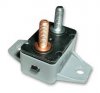
A shortstop breaker is what?
A shortstop breaker is what?
xxcarpxx
Member
Where is the video?
A shortstop breaker is what?
The video is one of many I have watched, trying to gain a little How To information... I watched so many, it would be difficult to find the certain one...
See the pic for similar 40 amp Shortstop Breaker..
Attachments
-
 5.3 KB Views: 5
They are hooking your bait, throw it in the water and wait. I'm adding up a headbang of a list. I thought of another 14.7p apply. You won't find these clues all in one place. The masters have two holes in the body. One drains into the hole when the pads wear and you still have the same pedal. The other hole is for 14.7. So first one must grasp the Penultimate number first for things to diagnose. And then there is fuel/spark/compression as the fundamentals for P to work. Then there is E and that's maggy and his action toys.*trying to gain a little How To information...
Hold down the ctrl key and press H for history. A window popup opens, take your best guess the name and enter it in the search bar. And to narrow it down, what week, day, etc to narrow it down more.I watched so many, it would be difficult to find the certain one
Those are my goto jobbers. 40a for a starter motor... 30a for a push button remote starter motor... 15a for lights... 10a for coil. Those are the winker relay dual pin. Same internal wire wrinkle. So I short across copper and steel legs, I break the fuse and save the wires and jobbers on down the next line and so forth. So I flash more or lock the flow at the breaker.See the pic for similar 40 amp Shortstop Breaker..
Relay is more a lot of prongs out from under a black plastic box. Sometimes used for heavy wire work is loophole that more or less you use the start button for this. The relay, now triggers the solenoid and now that hots the starter motor cable and boom she starts. So you have that solenoid between the hot battery post direct to starter leg, but the jobber (solenoid) stops it from being directly linked.
So I get out my trusty maggy and I cannot separate these 3 actions. I know from battery to the first jobber, I see the best metal to keep the chemRe from occurring, I run the copper leg of the breaker to all my hots and use the silver to run to the next jobber.
*Make sense about using maggy to think things out? You grab him by the foreskin and piss on all that fallacy on the net.
Signed,
Tormenting the cycling public one post at a time
xxcarpxx
Member
While being mesmerized by the artist know as Sven, I have totally made a mistake... I realize the video I watched was NEGATIVE POST... I mistakenly measured POSITIVE post to Lead...On my Negative, I have 3 Leads.. (ground..trickle charger and wire connect to the shortstop breaker
Again, I have 3 Leads on the Negative Post...
Two of the Leads are reading 12.84vdc
The Charger Lead reads .01vdc
xxc, this is thread hacking 101. Now I see where the 101(.3) comes from. I'm not college material. However, the wisdom came too late, so again, are we understanding some theory of the basics and when I mean Penny and her ultimate legs be closing on some of these dickheads LOL... JK
As I entertain myself with the tech questions at other sites, the exhaust now pops up with the other numbers being the same old number you deal with. One more handcuffing in the theory and WOT you are up against. So the abstract for the theory goes... When the bike is sitting in the garage all turned off anshit, what is the number or pressure in the room? 14.7 psi or 1 atmosphere, right? So room is more or less beating a baro here or there, but it still bleeds ATMO. So up in the pipe with the bike and no pulse out the backbecause it's off, the same air pressure applies, yes? So when I say backpressure or you hear that term, what number is heading 'back up dare?' Dare I say 14.7? Room for 2 for a pipe post and a serendpity too?
This is my reality. Bring on your fallacy to change that number; is that list growing. Are we seeing WOT I'm seeing I apply Penny and her suck the chrome off a fender kind of number? I keep swimming at the shallow end with the basics, so when you dive in on the electrical debrief, you'll be catching square waves soon in the deep end of the diagnosing.
Getting back to E, if you think about it, the first splitting of the atom was separating AC from DC. So if you see the concept of the abstract saying; you (-)guys sit over here with that post ready to go and you guys(+) sit over here and when you both meet in the middle, you cannot create or destroy an atomaggy. So they convert right back to AC is how that atom holds it's nuts in its trousers.
As I entertain myself with the tech questions at other sites, the exhaust now pops up with the other numbers being the same old number you deal with. One more handcuffing in the theory and WOT you are up against. So the abstract for the theory goes... When the bike is sitting in the garage all turned off anshit, what is the number or pressure in the room? 14.7 psi or 1 atmosphere, right? So room is more or less beating a baro here or there, but it still bleeds ATMO. So up in the pipe with the bike and no pulse out the backbecause it's off, the same air pressure applies, yes? So when I say backpressure or you hear that term, what number is heading 'back up dare?' Dare I say 14.7? Room for 2 for a pipe post and a serendpity too?
This is my reality. Bring on your fallacy to change that number; is that list growing. Are we seeing WOT I'm seeing I apply Penny and her suck the chrome off a fender kind of number? I keep swimming at the shallow end with the basics, so when you dive in on the electrical debrief, you'll be catching square waves soon in the deep end of the diagnosing.
Getting back to E, if you think about it, the first splitting of the atom was separating AC from DC. So if you see the concept of the abstract saying; you (-)guys sit over here with that post ready to go and you guys(+) sit over here and when you both meet in the middle, you cannot create or destroy an atomaggy. So they convert right back to AC is how that atom holds it's nuts in its trousers.