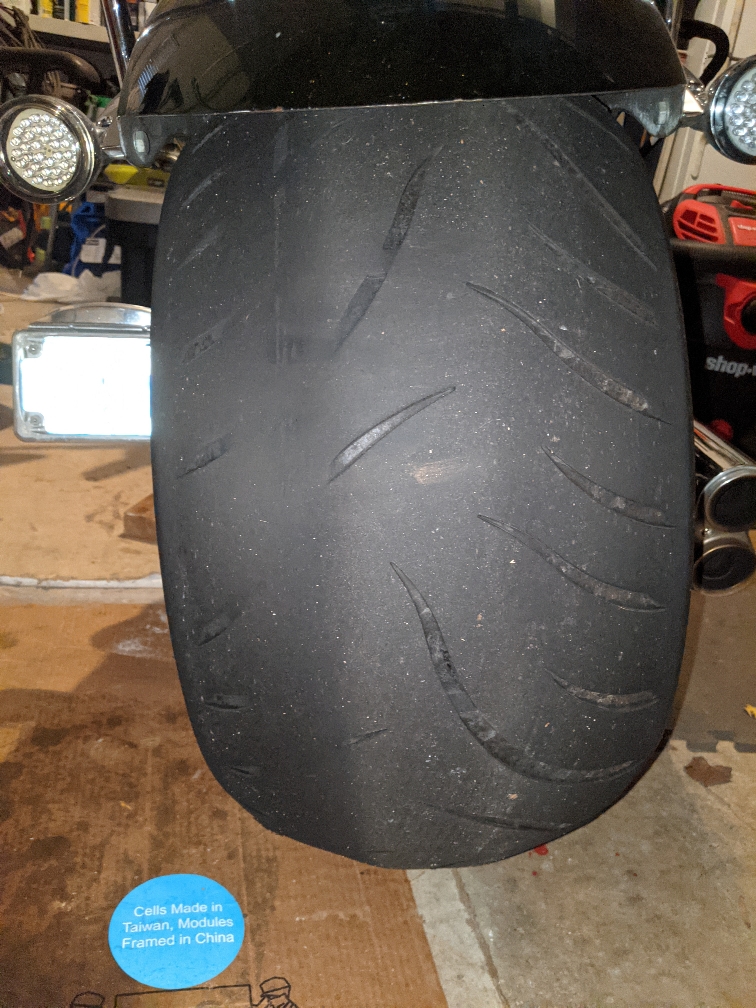
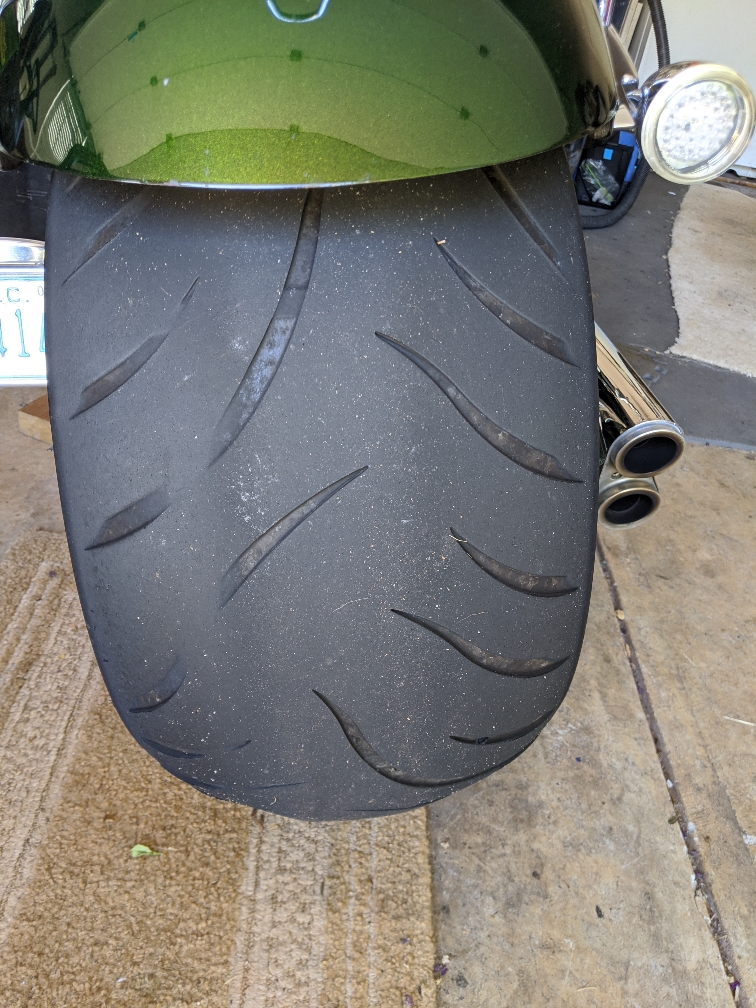
Thanks, Mick, but I think I missed a few.
With a ride to the hardware store, or welding supply house, buy a single welding rod or thin round-bar stock. Snip to size, meaning, one rod will have a bent L and that rests on the floor. The cut rod is going to slide next to the upright stationary rod with say tiny zip-ties. Bike has to be upright and squared, or sling a crank tie-strap over the garage rafters, hook the handlebars so the bike is about to be lifted; a level at the garage floor to check [not that it matters], then level the bike with a bubble leveler.
Go under one lower frame tube, raise the cut rod and let it touch the frame at the bottom. Swing the L so the sweep does not tag the frame, but more, pull one of the old lady's you know, place it between the rod and frame. Sweep the L and carefully remove it without moving the adjust rod. Go to the other side of the frame tube directly opposite of your choice of the first measurement. How many hairs off is it?
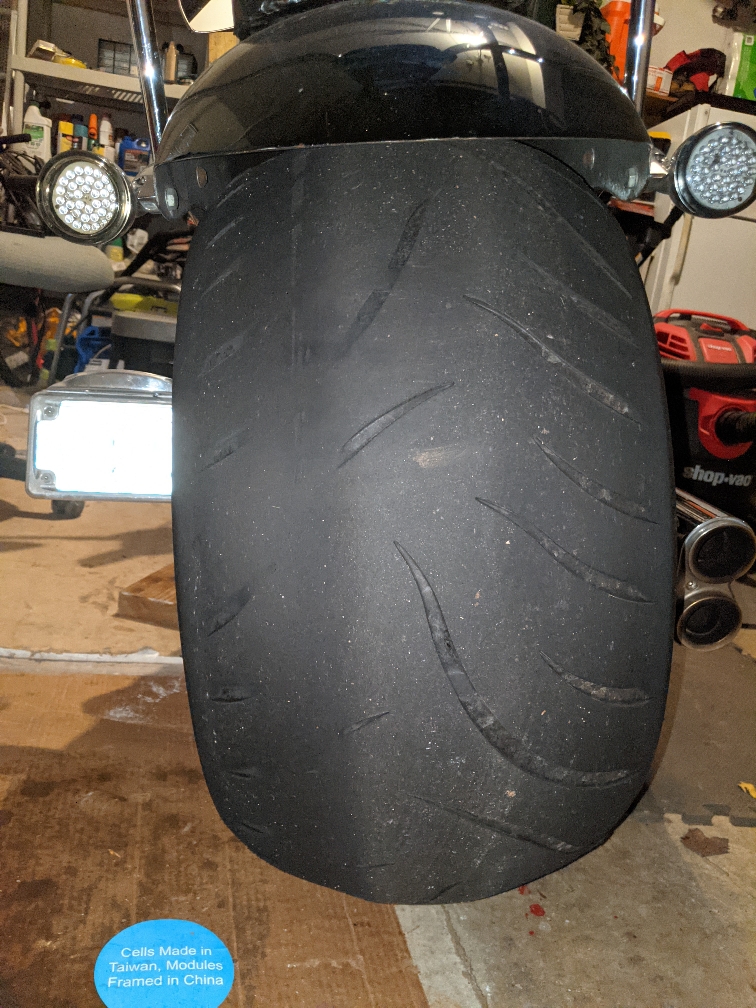
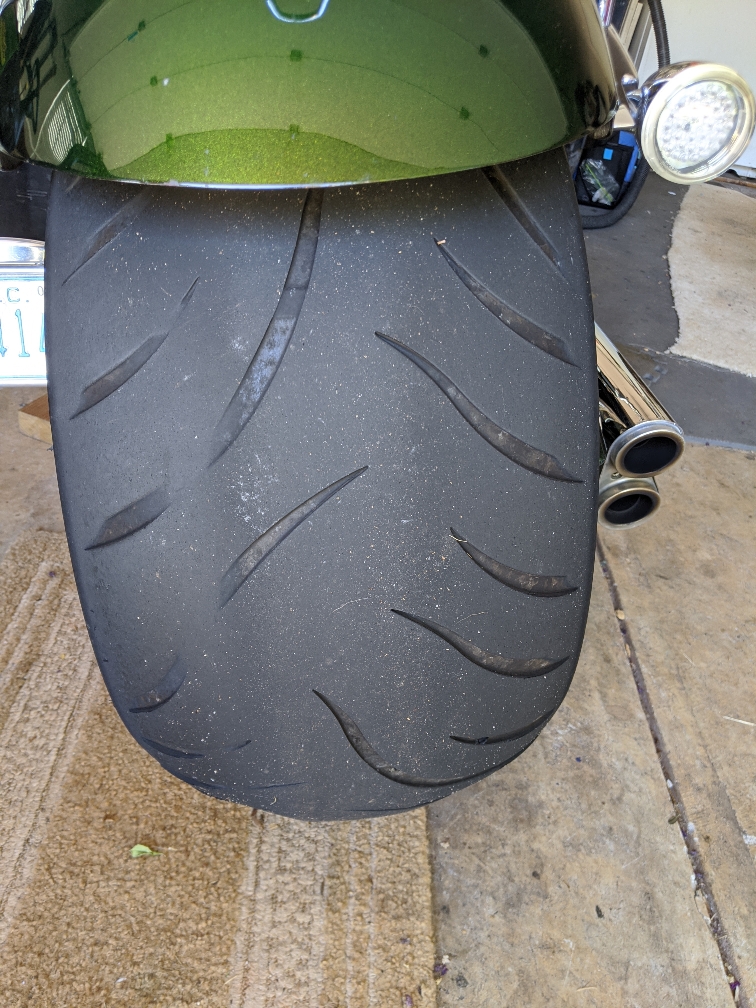
Might want to check 3 points alone the length of the lower frame. By holding the L with the thumb at the bottom, you can roll the rod in a sweep kind of pass. It hits - Maybe this might/not combo up and cause the shallow rain groove on the one side is the guess. Willy has to describe the wear pattern or send a photo from his 3 XL Pixel, because without a pattern, I'm just picking my nose.
Way out in left field, but square is square or triangulated is the front end setup. With the front wheel out of the way, the square is to again, palm the front axle and spin thru both forks. If say one is a screw in side, other side is just a round hole, palm the same way.
One fork remains static in the upper and lower crowns. You then float the other fork so the spin is effortless between the palms. Tighten the fork pinch bolts to spec; recheck palm spin. That front end is square to the triple-tree. The off-square is watching someone fight that axle going into the other fork. You can't push that axle in by hand, recheck your work. So, with a pea between you and the seat, one turn feels fine. Turn the other way it does not feel right. Strange, isn't it?
While each fork is on it's own spring pressure, grab the bath scale and push the fork up some. Go to the other fork and see if both feel equal or see pounds pressed as in; it goes something like this. Say the one spring is not as strong. The pressure of the frame on each spring sort of equals out, so it can't be the front end with perfectly squared forks when axle is inserted. Say for example the one spring rate is 10, and the sag spring is 9. Add/Divide = 9.5 is the average so it's not the front end setup/spring sag combo.
Willy has to show the front tire wear and does this too show a shallow rain groove on one side, a deeper groove on the other. Or is it 'stepped' at the center?