
Clutch Dome Height
- Thread starter PHATASS
- Start date

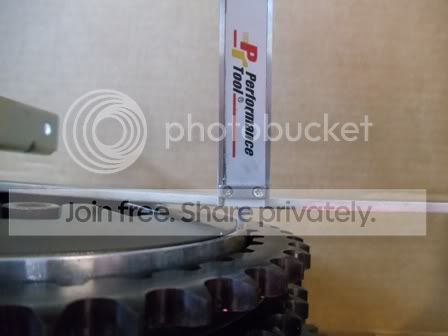
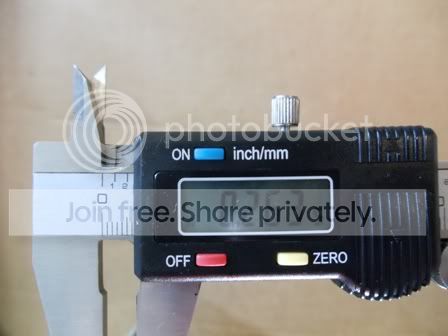

Fibersnake
Banjo Playing PsychoBilly
Not sure if you are trying to get the dome height for the proper pressure setting or what.
But if it is to set the proper diaphrame pressure, does not look right. That adjustement is done with the pivot plate installed and torque down to approx 200 inch pounds on the 4 bolts in a criss cross pattern brougth up in steps.
When mine was last done (though it is the 12 plate clutch verse the 9 plate) the height was .032 from outer edge to inner edge which was within the the Baker.
Pretty sure now that Bake just says tighten the 4 pivot bolts for the diaphrame springs to 200 inch pounds with no specified measurement. BDM may have a measurment in though.
If it is not for the pressure for the diaphrame, not sure why you are measuring it without the pivot plate installed. Does the manual show or mention the pivot plate, or does it give indication of what the measurment you are showing is for?
But if it is to set the proper diaphrame pressure, does not look right. That adjustement is done with the pivot plate installed and torque down to approx 200 inch pounds on the 4 bolts in a criss cross pattern brougth up in steps.
When mine was last done (though it is the 12 plate clutch verse the 9 plate) the height was .032 from outer edge to inner edge which was within the the Baker.
Pretty sure now that Bake just says tighten the 4 pivot bolts for the diaphrame springs to 200 inch pounds with no specified measurement. BDM may have a measurment in though.
If it is not for the pressure for the diaphrame, not sure why you are measuring it without the pivot plate installed. Does the manual show or mention the pivot plate, or does it give indication of what the measurment you are showing is for?

PHATASS
Active Member
I measured with the pivot plate installed and torqued and still came out with the same measurement. Basically trying to see if my clutch is w/n specs.Not sure if you are trying to get the dome height for the proper pressure setting or what.
But if it is to set the proper diaphrame pressure, does not look right. That adjustement is done with the pivot plate installed and torque down to approx 200 inch pounds on the 4 bolts in a criss cross pattern brougth up in steps.
When mine was last done (though it is the 12 plate clutch verse the 9 plate) the height was .032 from outer edge to inner edge which was within the the Baker.
Pretty sure now that Bake just says tighten the 4 pivot bolts for the diaphrame springs to 200 inch pounds with no specified measurement. BDM may have a measurment in though.
If it is not for the pressure for the diaphrame, not sure why you are measuring it without the pivot plate installed. Does the manual show or mention the pivot plate, or does it give indication of what the measurment you are showing is for?
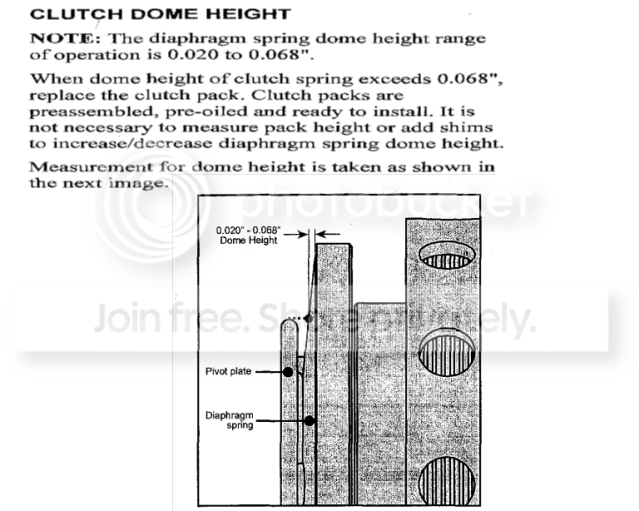
Last edited:

bearman
Active Member
no, you are not measuring it correctly. but you don't really need to measure it.
like Fibersnake said, just install the thing. then if you can adjust it and it doesn't slip or hang-up, its good.
if you can't get it adjusted to where the clutch works like its supposed to, then replace it.
The 9 plate clutch pack should be the same total thickness as the ones with more plates, but is easier to adjust.
like Fibersnake said, just install the thing. then if you can adjust it and it doesn't slip or hang-up, its good.
if you can't get it adjusted to where the clutch works like its supposed to, then replace it.
The 9 plate clutch pack should be the same total thickness as the ones with more plates, but is easier to adjust.
PHATASS
Active Member
Thank's bearman, the clutch doesnt slip or hang up. Was going through the manual and figured I'd try to learn something new just for personal knowledge since I had the basket out. Also wanted to see the wear on a babied clutch with 19K miles. Probally going to go ahead and install the 9 plate since I have the Baker ball & ramp assy from awhile back.no, you are not measuring it correctly. but you don't really need to measure it.
like Fibersnake said, just install the thing. then if you can adjust it and it doesn't slip or hang-up, its good.
if you can't get it adjusted to where the clutch works like its supposed to, then replace it.
The 9 plate clutch pack should be the same total thickness as the ones with more plates, but is easier to adjust.
How would one go out about the dome height procedure though?
Last edited:

Bobby Schulz
Active Member
That one is fine.
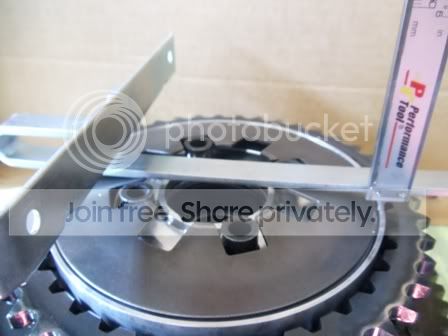
As a few have recommended, assemble the pack. Here are 2 things you want to look for without all the measuring, but to understand that wave washer.
1. Look at the fingers of that large wave washer, which is basically what it is. See the wear marks at the edge of the fingers? When you bolt that wave washer down at those tips, it is when you measure that flat part of getting the wave [hear me?], is getting the wave as flat as possible is the [watch this], is your eyes are the measuring tools.
a. Looking at the wave washer, the more wear of the plates, the more the wave relaxes back to how you see it in the static now = Less pressure ~ Slips and all that ~ Less wave tension = See that visual with the wave washer wear me back to memory?
b. Looking at it another way, you can put yourself in the cheap seats, say nothing to no one. What is the aim of the wave washer? To make it [flat is that gap]. So, will the wave know it is pushing on two steel plates? No. Will an extra steel plate flatten the wave for more tension so the used pack is being played out so in the cheap seats, you get to ride with more time playing out the parts? Yep. Add a steel to wave the plate back to flat.
c.Test for slip. If not slipping... Cha Ching!
2. Test for slipping> I'll say that the way to look at assembling the pack correctly is something called memory on the collapse.
a. Steel plates and frictions are stamped out of sheet metal? So there is a cut side and a smooth side. Feel the steel edges that may cut your fingers. Those face that wave washer. That is the stacking process to the clutch pack.
b. Same goes for the frictions. If you take your hands and push your fingers together, that is a flat meeting a flat steel on the collapse.
c. See the way memory fights that friction in between the steels? Now, turn one hand around and collapse your fingers over each other. See how they both are not fighting, but now clamping onto the friction [if the frictions are in the same direction] that is.
Universally, the pack is assembled this way for most bikes. The wave washer style is to make that wave as flat as possible = No tools needed, because there are so many parts that fit in the basket.