Operating Oil Temp

francoblay1

The Spaniard
Ok Franco , jag is the leading manufacture in oil coolers. The Manuel you turn off in the fall & turn back on when it's 85* again. The auto you never worry about. It works like a water thermostat in your car. When it gets hot enough it pops open and allows fluid through. I'm a hands on guy I run the manual. My cousin has the automatic on his 1999 Ultra Classic and he's pushing 125hp.
I gathered that much reading about them on the net but there are NO discussions about it.... done some Google searching and nothing.... but they are out of stock/discontinued on most shops.... so I am starting to think it might be a waste of time and money?

I might keep it old school... and in winter just cover the coolers with the leathers..
 

francoblay1

The Spaniard
Thanks! I tried searching but didnt find it anywhere.
I've found this from S&S back in 2010:

"S&S suggests you try to maintain oil temperatures of 180- to 250-degrees. Use an oil cooler if it is necessary to maintain this temperature range.

S&S Cycle recommends the use of Mobil 1® V-TWIN 20W-50 full synthetic oil from day one in our engines.

If you want to keep the costs down you can use Mineral based for the first two oil changes, but S&S Recommends then to switch back to Mobil 1® V-TWIN 20W-50 full synthetic oil for the remainder of the engine’s life."


https://www.facebook.com/notes/ss-cycle-inc/motor-break-in-recommendation/420391233414
 

liferider

Looking forward to retirement
I had the Manuel under the oil filter, took it out last week and ordered a automatic one.
 

heybaylor

Active Member
ok, I understand the temp range , however where is it measured?
I have mine coming out of the filter into the oil cooler.
It is about 30-50 degrees cooler there than it is with a cooking thermometer in the oil bag .
 

liferider

Looking forward to retirement
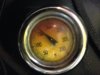
image.jpg image.jpg Ok, just got back from the Jefferson Tx ride and before I killed the bike I pulled my Manuel dip stick/temp gauge. This is what it read in the tank:
 

Attachments

liferider

Looking forward to retirement
This is oil tank temp. It is much higher when it leaves the motor. That's what the oil cooler does is it takes hot oil leaving the motor then delivers it back to the oil tank.
 

Nukeranger

Nukeranger
I do not have Oil Coolers and live further south than Jonathan. My normal in tank temperature runs from 185 to 205 in the summer. If I have to be above 210, I'm in trouble. But then again, this temperature is in the tank after mixing with the other oil and would be the delivered oil temperature vice leaving oil temperature.

My S&S Manual suggests Engine Oil temperature be 180 to 250 degrees Fahrenheit.
 

liferider

Looking forward to retirement
I do not have Oil Coolers and live further south than Jonathan. My normal in tank temperature runs from 185 to 205 in the summer. If I have to be above 210, I'm in trouble. But then again, this temperature is in the tank after mixing with the other oil and would be the delivered oil temperature vice leaving oil temperature.

My S&S Manual suggests Engine Oil temperature be 180 to 250 degrees Fahrenheit.
Your good, with the oil cooler it really pays off in heavy slow traffic! I got hung up in Sturgis and finally had to rev my motor to 2000 so my oil light would go off on my Ultra. The motor had gotten so hot the synthetic oil was so thin! I did 2 things after that. Installed oil coolers and swapped oil to Royal Purple!
 
Hey Guys, just thought I would chime in here with a couple things, working on and dealing with big BBC motors and boating, there's a misconception even among myself when I first started learning about fluids and stuff. Oil itself, doesnt start to flash till 190*... What does that mean.. In order for oil to actual do its job and protect your motor, it requires a certain temp to accomplish this, it doesnt actually start this process until enough heat has gotten into the oil to make it flash, which is around 190*. Once oil reaches this temp, this is where you get the most protection from. If the oil doesnt get hot enough to flash, youre not getting the protection into your motor you need. Obviously theres a break point to when oil gets too hot, which I have read on our bikes is 300... 280* is about the max you wanna see your oil temp before you start degrading it...
 

Th3InfamousI

Administrator
Staff member
Hey Guys, just thought I would chime in here with a couple things, working on and dealing with big BBC motors and boating, there's a misconception even among myself when I first started learning about fluids and stuff. Oil itself, doesnt start to flash till 190*... What does that mean.. In order for oil to actual do its job and protect your motor, it requires a certain temp to accomplish this, it doesnt actually start this process until enough heat has gotten into the oil to make it flash, which is around 190*. Once oil reaches this temp, this is where you get the most protection from. If the oil doesnt get hot enough to flash, youre not getting the protection into your motor you need. Obviously theres a break point to when oil gets too hot, which I have read on our bikes is 300... 280* is about the max you wanna see your oil temp before you start degrading it...
From experience >230/240 and your valve train starts to chatter. That's 230 in the bag.
 

liferider

Looking forward to retirement
All I know is when I was stuck in traffic and had to turn close to 2100 rpm on my ultra to make psi so my oil light would go off, that's to damn hot! Put the Jagg cooler on and it has never happened again, and I have been in worste traffic on hotter days since then! Maybe I will have to change oil more often . I really do not care! But damn if I'm going to cook off a motor!
 

Nukeranger

Nukeranger
Hey Guys, just thought I would chime in here with a couple things, working on and dealing with big BBC motors and boating, there's a misconception even among myself when I first started learning about fluids and stuff. Oil itself, doesnt start to flash till 190*... What does that mean.. In order for oil to actual do its job and protect your motor, it requires a certain temp to accomplish this, it doesnt actually start this process until enough heat has gotten into the oil to make it flash, which is around 190*. Once oil reaches this temp, this is where you get the most protection from. If the oil doesnt get hot enough to flash, youre not getting the protection into your motor you need. Obviously theres a break point to when oil gets too hot, which I have read on our bikes is 300... 280* is about the max you wanna see your oil temp before you start degrading it...
I have never heard of this! The Lowest "Flash Point" of Mobile One oil I have see is around 430 degrees Fahrenheit. I certainly don't want my oil to flash! Please explain this Flash phenomena to me....
 

liferider

Looking forward to retirement
olive oil has a low flash point of all oil's. I was curious what he said about the flash point being where the oil starts to work. I called the state fire Marshall and asked him what oil flash point means.

flash point


[paste:font size="5"]DefinitionTemperature at and above which a liquid gives off enough flammable vapor to form a mixture with air that can be ignited by contact with a hot surface, spark, or flame. Lower the flash point, greater the fire hazard. Common test methods of determining flash point include Pensky-Marten Closed Tester (ASTM D93-79), Setaflash Closed Tester (ASTM D3278-78), and Tag Closed Tester (ASTM D56-79). Since each test method may yield a different reading, the test method employed is usually indicated when a liquid's flash point is given in a material safety data sheet (MSDS) or in technical documents. Flash point should not be confused with auto-ignition point temperature at which combustion occurs spontaneously, without an external source of ignition.


Read more: http://www.businessdictionary.com/definition/flash-point.html#ixzz3eelFtcqW
 
Top