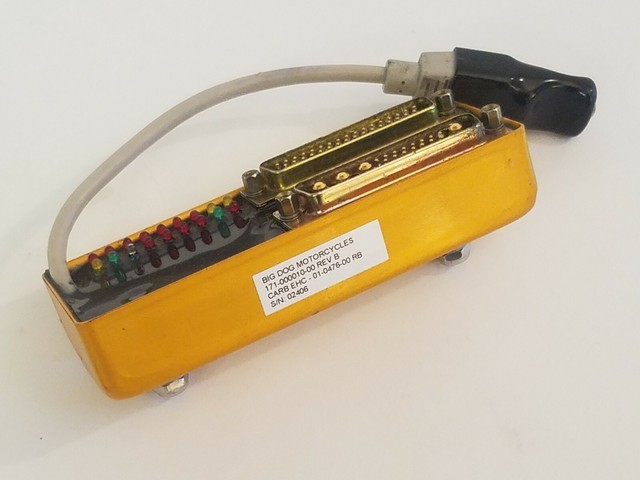
Correct me on this:
1. I have no meter, but a good known module to swap. I'm in a dark garage, I pull one plug and does it spark on the disconnect?
I then reconnect, I see the same exact spike. I swap to the good known, and when connected, hardly a spike. In the dark I can tell who is more parasitic.
2. With meter the swap will give even numbers on the connects; if I run the amp scale in between ground cable to battery post, yes?
If I lift the hood on the pin box and guess a diode is bleeding... it's a one way switch and if it fails, it bleeds like a parasite, right? Thus the more spike that lights up that one pin, whereas the other pin is ground... you can see the arc spikes off the tips, where the other pins would look the same except these two... depending on who was touched last, to who on the pull was disconnected first.
Takes 12v to hot the chip...
https://external-content.duckduckgo.com/iu/?u=http://osoyoo.com/wp-content/uploads/2017/08/555-timer-pinout.png&f=1&nofb=1 ... is 1 and 8, then 5 is the controlled 5v needed to process. Now, here is where I keep bumping into this 0.7v spike being somewhat universal in the math of it? I can't tell if that number is the spike when 12v is connected. But you get the idea it can be measured is the [parasitic-short] spike made.
2,7, and 6 is the heart beat/toilet flush/60hz on a rheostat kind of controller... think Christmas lights blinking at all sorts of speeds. Get it? I'm down to searching if it is a part under the hood that took a shit... someone changed the black box, and how did that diagnosis walk? I walked it two ways. Make sense?
Make sure you save the EHC. You're not out of the woods yet.... or has the time off the charger called the ball?
How did you figure the EHC was causing the problem?
1+