
Best way to trailer new bike?
- Thread starter mirage814
- Start date


http://www.bigdogbiker.com/forums/how/2665-tips-hauling-your-dog-enclosed-trailer.html
Check this out. There are more if you do a search.:up:
Check this out. There are more if you do a search.:up:

ksmike
Active Member
Congratulations on the bagger purchase!!!
Get 6 of the soft straps and 4 of the Fleece covers. You will need 2 of the straps to get enough length to wrap each front fork just above the lower triple tree. Make sure the fleece covers any contact point on the chrome (the soft straps will scratch chrome) Use some spa polish towels to stuff in any other contact points that the fleece covers don't protect. Wrap the triple tree in a way that it doesn't contact the fairing or put stress on the blinker.
The rear is easy, use a single soft strap covered by a fleece cover wrapped around the rear floor board right at the pivot bolt.
If you needs some pics , send me a PM with your phone # .
Mike
Get 6 of the soft straps and 4 of the Fleece covers. You will need 2 of the straps to get enough length to wrap each front fork just above the lower triple tree. Make sure the fleece covers any contact point on the chrome (the soft straps will scratch chrome) Use some spa polish towels to stuff in any other contact points that the fleece covers don't protect. Wrap the triple tree in a way that it doesn't contact the fairing or put stress on the blinker.
The rear is easy, use a single soft strap covered by a fleece cover wrapped around the rear floor board right at the pivot bolt.
If you needs some pics , send me a PM with your phone # .
Mike


KaptinAmerika
Guru
3 Fixed Points.
1. The bar-straps around the bars/grips/forks, are what KAmer was showing the first point of strapping. This is so the marring is limited off the bike's paint, or fairing mounts, etc. No covers used during transportation, or the tarp whipping is going to show you a new kind of paint finish. With the two option points, I rather use the strap as close to the bar clamp and use the handlebar tube as point A.
2. The tie-downs are laced thru each bar-strap. Find the farthest corner of the trailer or truck bed and strap those down and load the forks against the trailer/bed so when you have the bike pretty much honkeredown, is point B. Stand in back of the trailer/bed and see that the bike is sitting upright. If not, loosen one/tighten the other until the bike is upright and front wheel is as centered as possible against the said stop.
3. Tie-wrap or the one tie-strap with a hook and nothing at the other end. This is the final strap point. Hook the one end to the hook you used for the one bar strap anchored on the trailer or truck bed. At the bottom of the rim, lace the wheel-strap around the rim, back around again and tighten the one hooked side of the strap. The idea is to keep the front tire from rocking out of center and flop over: causing the straps to lose tension. Those are your minimum stake points with said investment about to be moved.
Option #4. The bike's rear wheel is going to hop up and down you hit a good one say. Take a second open-hooked-strap, lace the same wrap around the rear rim [like the front] and secure it down: where you can set the hook directly under the trailer/truck somewhere and keep the back wheel from hopping up and down; swapping directions at either side.
1. The bar-straps around the bars/grips/forks, are what KAmer was showing the first point of strapping. This is so the marring is limited off the bike's paint, or fairing mounts, etc. No covers used during transportation, or the tarp whipping is going to show you a new kind of paint finish. With the two option points, I rather use the strap as close to the bar clamp and use the handlebar tube as point A.
2. The tie-downs are laced thru each bar-strap. Find the farthest corner of the trailer or truck bed and strap those down and load the forks against the trailer/bed so when you have the bike pretty much honkeredown, is point B. Stand in back of the trailer/bed and see that the bike is sitting upright. If not, loosen one/tighten the other until the bike is upright and front wheel is as centered as possible against the said stop.
3. Tie-wrap or the one tie-strap with a hook and nothing at the other end. This is the final strap point. Hook the one end to the hook you used for the one bar strap anchored on the trailer or truck bed. At the bottom of the rim, lace the wheel-strap around the rim, back around again and tighten the one hooked side of the strap. The idea is to keep the front tire from rocking out of center and flop over: causing the straps to lose tension. Those are your minimum stake points with said investment about to be moved.
Option #4. The bike's rear wheel is going to hop up and down you hit a good one say. Take a second open-hooked-strap, lace the same wrap around the rear rim [like the front] and secure it down: where you can set the hook directly under the trailer/truck somewhere and keep the back wheel from hopping up and down; swapping directions at either side.
ksmike
Active Member
Like he said...it will take at least a 10' Trailer, the bagger is about 8 1/2' long. Trying to put it in a trailer corner to corner with the bags is very risky. BWG56 has it pretty much pictured the way to do it. The exhaust on the right makes it difficult to tie to the swingarm, so that is why I use the floor board mounts. The front soft tie for a bagger needs to be longer also because of an additional bracket that holds the fairing on. I use a 16" soft strap and 16" fleece cover for the front fork, and then I use one additional soft strap looped through the ends of the first strap to give me more length. (I need to get a 24" fleece cover and softstrap). I use MAC straps.The 8' trailer will not be long enough. It may fit if you place the bike corner to corner but a 10' trailer will be a lot easier and safer. Good luck!


BWG56
Guru
the yellow tie downs are connected to Big Dog Softies on the red straps, its the black thingAfter seeing the pics on here of how to tie down and trailer your bike, I thought I'd offer one last tip from what I saw on here.... on your front forks where he has used the tie downs... PUT A TOWEL OR RAG UNDER THE TIE DOWN!! IT WILL LEAVE A MARK OTHERWISE!! just a heads up...
KaptinAmerika
Guru
Ask Raywood
God knows he's uhauled his chop all over this country
God knows he's uhauled his chop all over this country
BWG56
Guru
Go buy some at home depot or lowes and screw them down to the floor in the u-haul and then remove them before you take it back. The floor in them are usually beat up anyway and no one will notice a few extra screw holes.I doubt that a U-Haul trailer will have the floor cleats to tie down. Does anyone know for sure?
O
okie_dog
Guest
u hauls don't have floor tie downs, usually only the rails on the sides. just have someone ride back there and hold it upright an holding the brakes

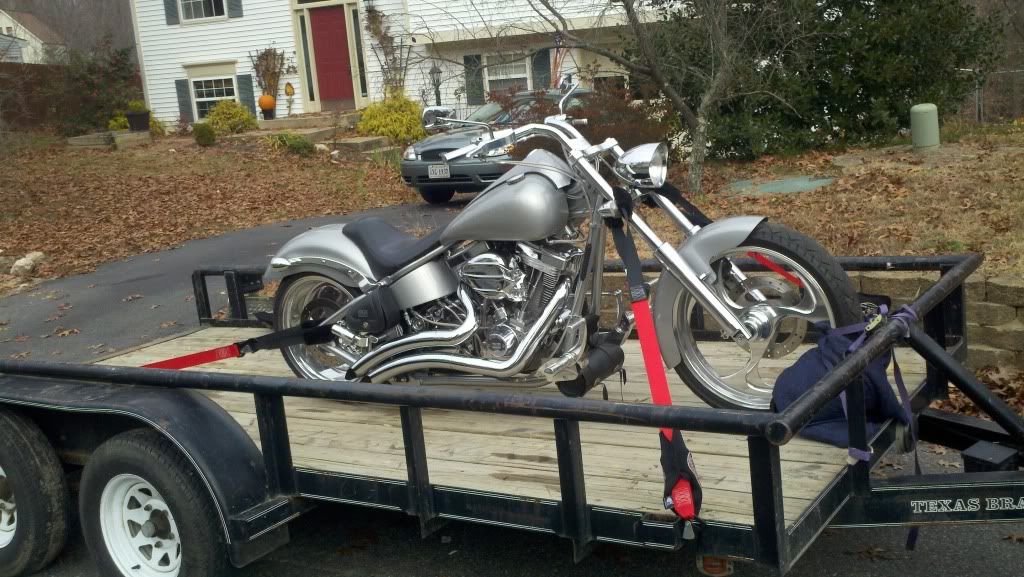

Nukeranger
Nukeranger
My Dog followed me home the same way Scott's did,
My front wheel was tied the same way but not shown in the picture below
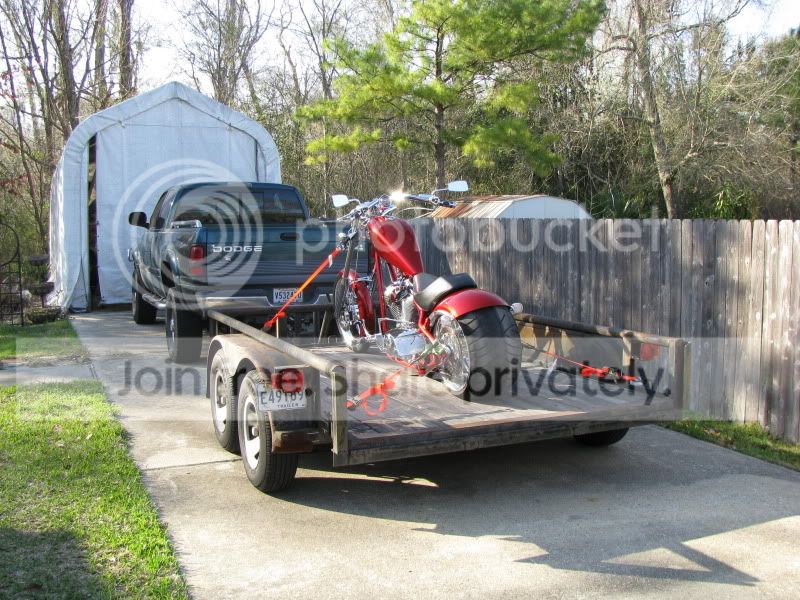
My front wheel was tied the same way but not shown in the picture below