
600 Cam & Coil Bind Question
- Thread starter Big Ron
- Start date


lee
Well-Known Member
not too sure what coil bind means but I guess most people on here would recommend you upgrade the springs if installing this cam
I have a used S&S 600 cam and triple coil springs, which I have just taken out of my bike - if you want them send me a pm and we'll work something out
I have a used S&S 600 cam and triple coil springs, which I have just taken out of my bike - if you want them send me a pm and we'll work something out

V
Guru
"Coil bind" is when the cam has enough lift to make the springs compress to the point that the spiral coils actually hit together and can cause severe failure (metal to metal) $$$. I have never heard of the stock springs doing this but would reccomend that you go to the .640 springs so you will have good seat pressure and if you're high revin you will not fatigue the weaker springs.
Thanks V.
Thanks V.

Chopper Dave
SIICK!!!
Ron.....I had the S&S .600 cam installed in my bike with the .640 springs. My bike already had the .640 springs in it...so I was good to go.....you might already have .640 springs in your bike.....the way you tell is there will be a red stripe down the springs...
look in Gas Man's thread....scroll down the page to the rocker boxes part...
http://www.bigdogbiker.com/forums/customizing/1151-road-phoenix-11.html
look in Gas Man's thread....scroll down the page to the rocker boxes part...
http://www.bigdogbiker.com/forums/customizing/1151-road-phoenix-11.html
Last edited:
The best thing to do is, pop off the front rocker cover and see what springs you have. Then at least you won't get hosed by the dealer if they put your camshaft in. Coil bind is very unlikely. Valve float with the wrong springs is more like it. In the event of coil bind you need longer valves or a deeper spring seat.
Last edited:
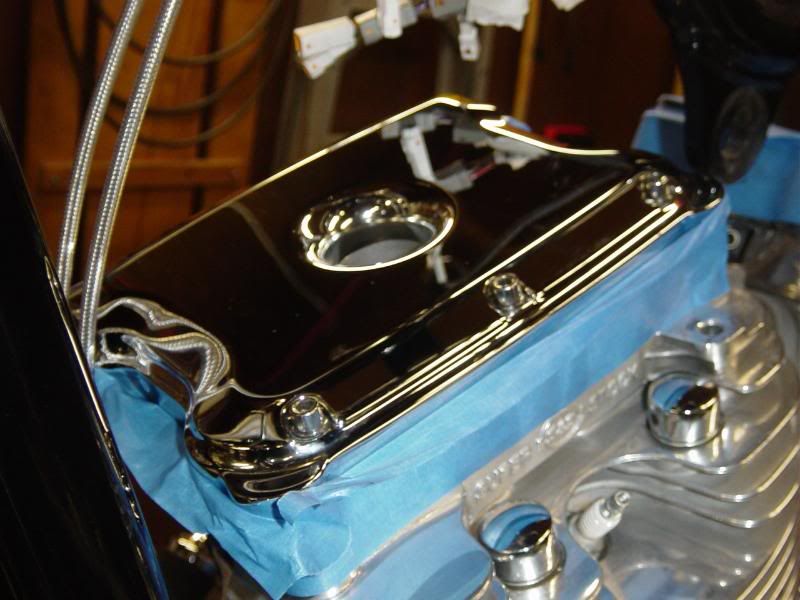
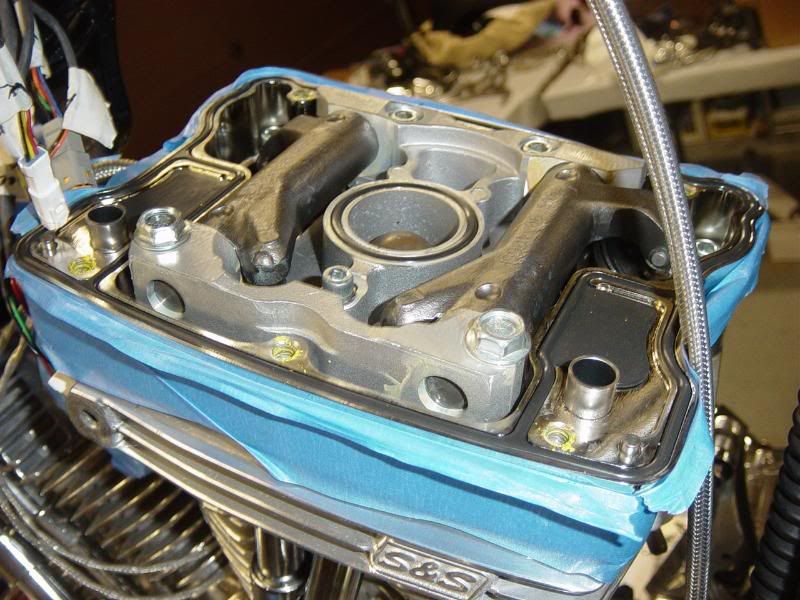

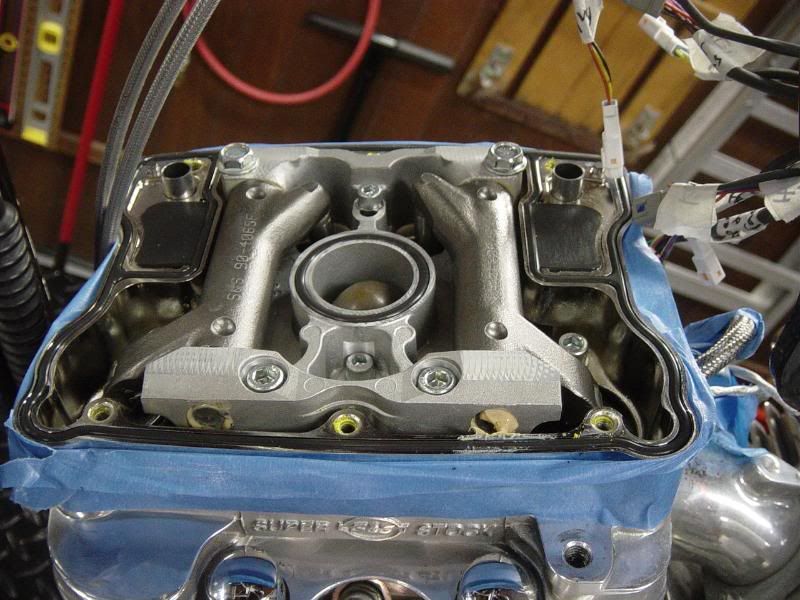
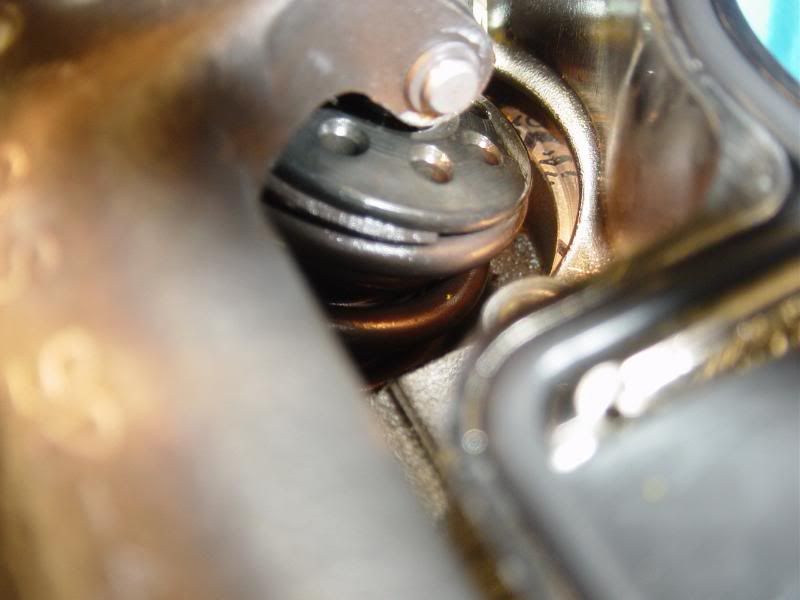

bdmridgeback
Low Down Chop Shop
I have had my .600 cam in for about 5000 miles and no issues. I called Tampa Big Dog before I did mine and they said they do TONS of .600 cams with stock 2005 .600 springs. As long as your not riding the rev limiter 24/7 then you'll be fine. If you abuse your bike, then put the .640 springs in it just to be safe. I don't abuse my bike but i do ride it like I own it and I have fun with it and do not "baby" it.
Normal riding, a race here and there, a burn out or two a day won't hurt a thing with the .600 springs. Just make sure you have the .600 springs in it.
Normal riding, a race here and there, a burn out or two a day won't hurt a thing with the .600 springs. Just make sure you have the .600 springs in it.
Last edited:

sh8kr
Member
if you do decide to go with the different Springs, talk to shop. This is a project that can get pricey since most us will want to add'l headwork while the heads are off. Having said that, this is where you will get the most bang for the $$. In Short decide what future plans you may have and have all the work completed at the same time. Decking the heads to bump compression and a good porting will not cost much more since you wil have already planned on paying for the labor and Springs.
My .02
Steve c
My .02
Steve c
Thanks guy's. All great responses also.
Where I was going with this question is that I'm possibly going to change cams down the road and was not necessarily looking to have to change springs. I'm only interested in doing a minor hop-up but I do admit the desire to take it further is there.
I talked to the S&S techs in Daytona about the EPA cam thats in it now and I was pretty certain I remember him saying I would be good to go with up to a 600 S&S cam and not have to change anything else aside from a possible tweeking of the jet set.
I spoke to Carl of Carl's Speed Shop about using a set of their "special baffels" only, for an even lighter hop-up but he thought I would be much happier with adding a cam bump to it also. This I'm sure is a good low cost combination to get another 12-17 HP (his words) but I don't know enough about this subject yet to make an educated decision.
Now all that being said: I understand, at least I think I do what decking the heads mean. The end result is to decrease the piston distance from the top of the cylinder to gain compression. If I'm wrong please set me straight. I've heard the prefered method is to remove the surface from the bottom of the cylinder. Would this be correct in your opinion?
This whole port, polish, and flow test thing I'm in the dark on that one.
Where I was going with this question is that I'm possibly going to change cams down the road and was not necessarily looking to have to change springs. I'm only interested in doing a minor hop-up but I do admit the desire to take it further is there.
I talked to the S&S techs in Daytona about the EPA cam thats in it now and I was pretty certain I remember him saying I would be good to go with up to a 600 S&S cam and not have to change anything else aside from a possible tweeking of the jet set.
I spoke to Carl of Carl's Speed Shop about using a set of their "special baffels" only, for an even lighter hop-up but he thought I would be much happier with adding a cam bump to it also. This I'm sure is a good low cost combination to get another 12-17 HP (his words) but I don't know enough about this subject yet to make an educated decision.
Now all that being said: I understand, at least I think I do what decking the heads mean. The end result is to decrease the piston distance from the top of the cylinder to gain compression. If I'm wrong please set me straight. I've heard the prefered method is to remove the surface from the bottom of the cylinder. Would this be correct in your opinion?
This whole port, polish, and flow test thing I'm in the dark on that one.
With these motors I have been told you don't deck the heads so much as deck the jugs back to stock height to put the compression back up wo where it should be... non-epa.
And I know that some of the 2007 K9's have 640 springs. A michigander came across this a few weeks ago.
And I know that some of the 2007 K9's have 640 springs. A michigander came across this a few weeks ago.
bdmridgeback
Low Down Chop Shop
Just doing the .600 cam without the head work is a big power improvement for the $100 cost of the cam. I'd say it is the biggest bang for the buck.
I'd say if you want to spend little money and get a big improvement in power, do the .600 cam, XXX carb, bandit clutch, and a good set of pipes.
It will make a good chunk more power and put it to the ground much better than the stock clutch.
Stock clutch starts to slip after cam, carb and good power exhaust.
I'd say if you want to spend little money and get a big improvement in power, do the .600 cam, XXX carb, bandit clutch, and a good set of pipes.
It will make a good chunk more power and put it to the ground much better than the stock clutch.
Stock clutch starts to slip after cam, carb and good power exhaust.

HDLARRY
Active Member
BigRon,Thanks guy's. All great responses also.
Where I was going with this question is that I'm possibly going to change cams down the road and was not necessarily looking to have to change springs. I'm only interested in doing a minor hop-up but I do admit the desire to take it further is there.
I talked to the S&S techs in Daytona about the EPA cam thats in it now and I was pretty certain I remember him saying I would be good to go with up to a 600 S&S cam and not have to change anything else aside from a possible tweeking of the jet set.
I spoke to Carl of Carl's Speed Shop about using a set of their "special baffels" only, for an even lighter hop-up but he thought I would be much happier with adding a cam bump to it also. This I'm sure is a good low cost combination to get another 12-17 HP (his words) but I don't know enough about this subject yet to make an educated decision.
Now all that being said: I understand, at least I think I do what decking the heads mean. The end result is to decrease the piston distance from the top of the cylinder to gain compression. If I'm wrong please set me straight. I've heard the prefered method is to remove the surface from the bottom of the cylinder. Would this be correct in your opinion?
This whole port, polish, and flow test thing I'm in the dark on that one.
I may have missed some things here but this is my general understanding.
Minor porting - just matching up the intake manifold to the head intake ports so that it has no ridges at the connection. Also remove any casting ridges inside the port areas. Multi angle valve grind. Just kind of smooth things out for better flow.
Major porting - Could include more shaping of the port chambers, potential welding to change the shape of the combustion chamber and ports. Would likely include polishing and flow testing.
Polishing - Is just what it says but normally the exhaust ports are polished to a very smooth finish. The intake ports are left slightly ruffed up to promote fuel atomization, the theory being that a little turbulence is good.
CCing Heads - This is just measuring the exact volume of space in each heads combustion area (cubic centimeters). They should be the same, if not; some more has to be taken off of one of them.
Flow testing - Another test done with some specialty measuring equipment that tells you exactly how many standard cubic feet of air will flow through each head with a specific air pressure differential and valve opening. Again you want a matched pair.
It is nice to have a chart of what your heads can flow when deciding on a cam. Kind of a waste to put in a .650 lift cam if you’re maxed out on flow at a .500 valve lift opening.
Thanks HDLarry. I appreciate that info and will save that for future reference. I most certain will not be going the route of all the tear down work required for porting,polishing, etc. At least at this point.
I should have talked to the tech about my spring sizes at Daytona but didn't think to do that.
To Lee, thanks for your offer for the 600 cam and springs but I am going to pass on that at this time. I have a little while left on the warranty and am still going through the break-in stuff (1700 miles). After that if you have not dumped them i'll give you a call.
I should have talked to the tech about my spring sizes at Daytona but didn't think to do that.
To Lee, thanks for your offer for the 600 cam and springs but I am going to pass on that at this time. I have a little while left on the warranty and am still going through the break-in stuff (1700 miles). After that if you have not dumped them i'll give you a call.
lee
Well-Known Member
no problem Ron - good luck with it all - by the way, out of interest, what sort of power gains are you looking for? by that I mean bottom, mid range or top end - max power or acceleration? acceleration is down to average power more than top end power - all this is relevant as different mods work in different ways. For example a XXX G is more for max power than low-mid range torque due to the big venturi, hence I am thinking about changing mine in the not too distant future as my cam is designed more so for the low-mid range power stuff, which is what I want. You need to decide exactly what you're after and talk it through with a knowledgable mechanic who genuinely knows how to make it happen - this stuff can get very comlicated. The exhaust can be the most complicated to get right believe it or not as for maximum results it should be dialled in to valve opening / closing and overlap.
I'm trying to look more at bottom and midrange thump. The top end speed is not really where I will be at the most often.no problem Ron - good luck with it all - by the way, out of interest, what sort of power gains are you looking for? by that I mean bottom, mid range or top end - max power or acceleration? acceleration is down to average power more than top end power - all this is relevant as different mods work in different ways. For example a XXX G is more for max power than low-mid range torque due to the big venturi, hence I am thinking about changing mine in the not too distant future as my cam is designed more so for the low-mid range power stuff, which is what I want. You need to decide exactly what you're after and talk it through with a knowledgable mechanic who genuinely knows how to make it happen - this stuff can get very comlicated. The exhaust can be the most complicated to get right believe it or not as for maximum results it should be dialled in to valve opening / closing and overlap.

scubaman15
Well-Known Member
>>>Big Ron ...wondering if you ever dropped the 600 in your ride ..?
Not yet.>>>Big Ron ...wondering if you ever dropped the 600 in your ride ..?
Chopper Dave
SIICK!!!
when ya thinking of doing that Ron? you still going to go with the .600 cam?