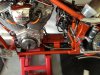
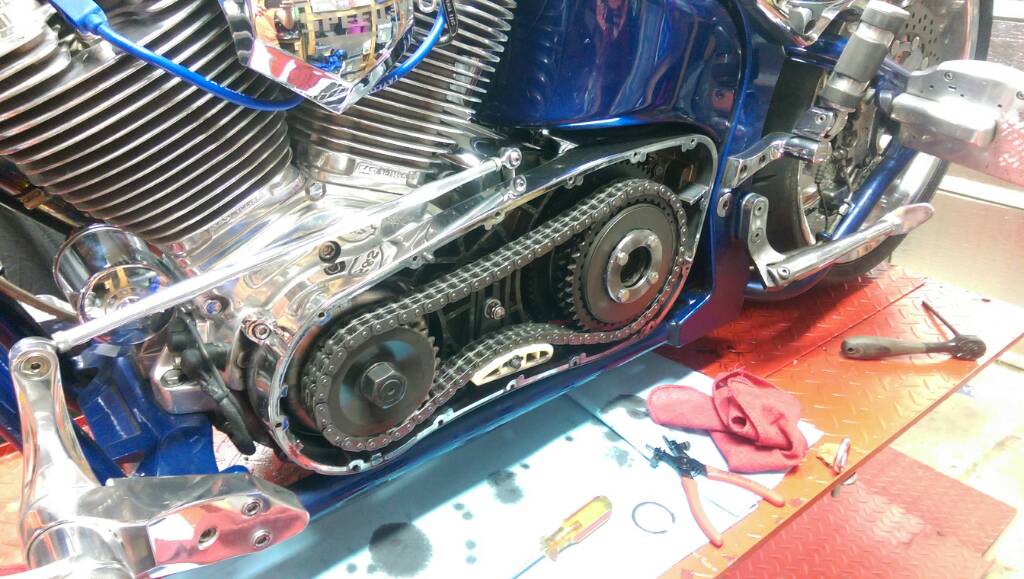
Hi Eric--Ditto Tom and Frank above. Hopefully you have a manual. Just as important are several good Forum threads on this topic. I don't know your skill level, but stay organized---not a bad idea to take iPhone pics of things because you'll have a while until you put it back together. Some use a magnetic dish for nuts and bolts and label sandwich bags to keep it all straight. Another tip from Blacktopper is to get a big cafeteria tray to put under the bike to capture any oil, etc.
Use a wire wheel to clean bolts, and you'll find a cheap set of bottom taps at Harbor Freight to clean Loctite out of bolt holes. Your torque wrench will thank you.
Barnes is generally recognized as having set the standard, so he is busy and you'll have to wait your turn. He's honest, communicates well, and will do a good job. Most expect to pay $750+/- for bearings and seals...mine was $1,500 because of defective shifters, etc. worth every penny.
The transmission has to take a real beating given the power these bikes make, and to pull up short will cost you. A whole different ball game than the Harleys.
Lessons learned:
1. Do it right the first time. Follow the manual and read Forum threads.
2. Do NOT abuse the transmission in higher gears.
Downshift to pass
Do not use full throttle in higher gears at lower rpm...1st and 2nd only.
Rarely do I ride at less than 2500+ rpm...usually cruise closer to 3,000.
No 6th gear until at least 65-70 mph. It's an overdrive, meaning the engine is turning fewer rpm's than the transmission (.85:1, I think). Consider the forces at full throttle at say 2200 rpm--the acceleration curve will be sluggish, but the engine torque generated will be considerable. Torque force can't go towards quick acceleration because of the low rpm and high gear ratio, so it goes right through the gears (4,5,& 6) to the bearings, as Woodbutcher says. And after the bearings fail, they can sieze, spin, and ruin the transmission case.
Sorry for the long post----maybe I need a twelve step program or something.