Best Way To Splice Wires...

Energy One

MossBerg590

Active Member
I'm wiring up my TH harness and need to add a few ground wires for the controls. Talked to TH and they said I am able to add some ground wires in and just splice it to the harness ground wires. What is the best way to splice in a wire to make a single into a dual wire? Looked at some connectors at local stores but they are all bulky, I was thinking of just soldering in the wires and shrink wrapping and maybe putting some tape over that. A few people I talked to said that soldering would be stronger than any crimp. What do you think? Is soldering my best bet? Thanks for any help.
 

Mr. Wright

Knows some things
Supporting Member
Yes and no. If you do a proper solder joint, seal it and secure it properly, it will be fine. A bad solder joint, or one that has any movement will break. Same said with an improper crimp joint.
 

chubs

Guru
Yes and no. If you do a proper solder joint, seal it and secure it properly, it will be fine. A bad solder joint, or one that has any movement will break. Same said with an improper crimp joint.
Shannon, You are absolutely correct about splicing with solder, as it tends to make a rigid point in the wire which will fatigue and break. kind of like bending a piece of steel multiple times. Also, when soldering, use the proper solder and flux, never acid core as that will cause corrosion. By the way Shannon, you saved my bacon with my solenoid problem.
 

cdogg556

Guru
I'm wiring up my TH harness and need to add a few ground wires for the controls. Talked to TH and they said I am able to add some ground wires in and just splice it to the harness ground wires. What is the best way to splice in a wire to make a single into a dual wire? Looked at some connectors at local stores but they are all bulky, I was thinking of just soldering in the wires and shrink wrapping and maybe putting some tape over that. A few people I talked to said that soldering would be stronger than any crimp. What do you think? Is soldering my best bet? Thanks for any help.
This is some great info posted by "BroadBand" that I have used to do all my wire splicing or connections!:old2:
http://www.bigdogbiker.com/threads/basic-motorcycle-wiring.56256/
 

cdogg556

Guru
That's what I did for 38 years, designed the tooling for hand tool and applicators to apply terminals to wires, crimped correctly they are hard to beat.:whoop::old2:
So you agree with BroadBand's info? I still soldered the connections anyway, don't ya think if it's a good soldered connection that it is better than just twisted together!
 

MossBerg590

Active Member
Thanks for the info. I guess ill take my time and solder in the extra wires. I cant seem to find a y connector that seems like it will hold up well. Any thing i can do to take strain of the solder points so it wont crack? Double up on heat shrink? Wire tie it to the frame at those joints? Thanks
 

Mr. Wright

Knows some things
Supporting Member
Shannon, You are absolutely correct about splicing with solder, as it tends to make a rigid point in the wire which will fatigue and break. kind of like bending a piece of steel multiple times. Also, when soldering, use the proper solder and flux, never acid core as that will cause corrosion. By the way Shannon, you saved my bacon with my solenoid problem.
If you don't have one already, get with the Kaptin and get you a slam button, in case it breaks again.
 

Jwooky

Well-Known Member
Solder/shrink wrap is the best method.

Wire fatigue will only occur when there is relative motion. ie... a loose wire connected to a stationary point. When the joint is wrapped up in a harness, there is not a concern.
 

1BADK9

Limited Edition Member
Remember too in making a solder connection you must first have a sound mechanical connection, ie wires twisted together tightly, if you can't pull them apart before you solder you have made a sound mechanical connection, that will not fracture due to stress or vibration or explosion!! and of course shrink tube to cover the connection and you have a superior connection!

Oh and it's not like oral sex, the bigger the blob the better the job.......doesn't apply to a good solder joint! A good solder joint will have just enough solder to coat the strands of wire, the finish should be very shiny and the individual strands of wire should be visible through the solder , if it looks dull not shiny and a big blob.....you probably have a cold solder joint reheat and try again.
 
Last edited:

chubs

Guru
If you don't have one already, get with the Kaptin and get you a slam button, in case it breaks again.
Shannon, I had that very same thought. I got a slam button made by a friend who runs a small bike shop in Battle Ground Ind. (a place that rhymes with B & C Cycle ) Nice plug don't ya think?
 

Viking

Biker
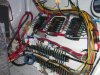
So you're suggesting connectors can't fail, huh? Well, two of these failed but I have yet to have a soldered connection fail. Yes they are all 3M connectors, crimped with professional crimper, and heated to shrink. Motorcycles and boats are way different than inside a car or inside an airplane. A soldered connection with crimp tube is just as good if supported properly, but that's just my $0.02 worth....

image.jpeg
 

BWG56

Guru
So you agree with BroadBand's info? I still soldered the connections anyway, don't ya think if it's a good soldered connection that it is better than just twisted together!
This started off with soldered vs crimped, when was twisting even an option, and if you even try to twist and get away with it,
I will
:oldlaugh::oldlaugh:
 

cdogg556

Guru
So you're suggesting connectors can't fail, huh? Well, two of these failed but I have yet to have a soldered connection fail. Yes they are all 3M connectors, crimped with professional crimper, and heated to shrink. Motorcycles and boats are way different than inside a car or inside an airplane. A soldered connection with crimp tube is just as good if supported properly, but that's just my $0.02 worth....

View attachment 26960
:agree:
 

Jwooky

Well-Known Member
Again the key is relative motion. It doesn't matter if its solder joint, crimp joint, or else. If one end if fixed, the other moving the wire will fatigue and break.

To avoid, this the wire must be supported.
 
Top