Sure
The easiest way is to remove the positive terminal from the battery.
Wrap it with a rag so it does not inadvertently come in contact with the post while your testing.
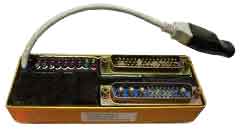
Now remove connector B from the EHC and pull it out so you can access the pin holes.
Connector B is the one next to the LED diagnostic lights.
Look closely at the pin holes and you will see numbers next to them.
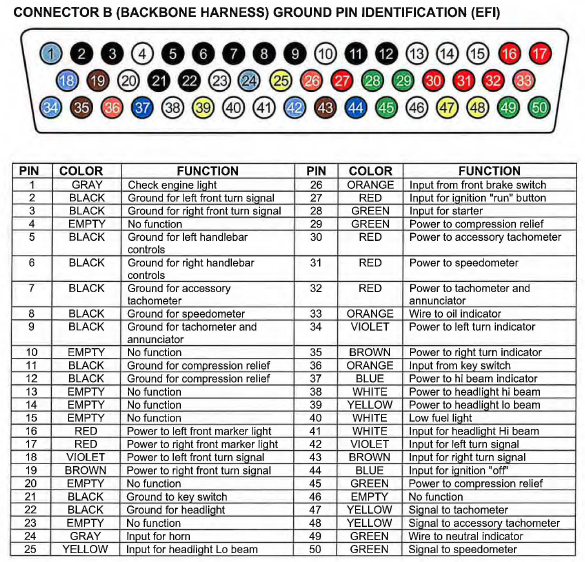
Find pin 28, that's the input line from the starter button, and pin 6, that's the ground line for the right hand control.
Get a couple of pieces of wire that will fit into the pin holes of the connector.
Set your volt meter to continuity.
It easiest to use a couple of alligator clips and clip the black probe from your volt meter to the wire on pin 6 and the red probe of your volt meter to the wire in pin 28.
Now press the start button. If you have continuity then you know the harness is in good shape and is supplying the correct signal to the EHC. If you have to wiggle your finger around or push really hard then the switch may be going bad. In some cases they can be repaired fairly easily. We do provide that service for $49.95 if you need it.
The image below indicates "EFI" but the pins are the same for "NON-EFI".
If you have continuity and everything is in good shape then you will have to move on to the next step of trouble shooting.
In your case having the flashing lights and blowing horn when your battery is at 13 volts tells me you either have an EHC that is dying or you have issues in the power supply to the EHC. Loose connection or corrosion on the connectors. I have seen batteries that are showing high voltage but have lost a cell and can't send the amperage needed to satisfy the EHC.