
Ness kickstand, does this look right?
- Thread starter badyellowvette
- Start date


pknowles
RETIRED
Doesn't change the angle of the kickstand but should change the angle of the bike if it is screwed out versus screwed in. Longer should equate to the bike setting more upright.Yea, I guess your right. Extending the length of the stand does not change the angle.

Magoo
Dog Locked
No it doesn't, have mine screwed all the way out, still leans way over. I took off the A-Ness and put back on the stock one. Stands up straighter with stock! Anyone looking for an A-Ness kickstand?Doesn't change the angle of the kickstand but should change the angle of the bike if it is screwed out versus screwed in. Longer should equate to the bike setting more upright.

LamboV12
Active Member
OK I’ve been watching this for a while and can answer some of the mysteries on the stand – having done a couple of these; I can tell you what I learned.
1. Yelowvette – Yes you installed it correctly. It seems that Ness (or the manuf) has changed the design – don’t know if on purpose or accident. The older ones stand normally and on the newer ones the claw points too far forward. You really can’t control the angle because it’s controlled by the flat spot where the set screw has to lock.
You can’t tell a new one from an old one by looking at it – Looks like Zen bought his recently, but it was new old stock.
2. Unscrewing the leg to make it longer will raise the bike up – Not always. Depends on the bike – On a chop or ridge yes, on a K9 not so much. If you sit on your bike and open the kickstand, it goes down and out. It’s the out factor. If you look at where the mounting holes are on the frame of a K9 they are vertical – on a ridge they are angled to the left. When angled to the left the actual leg is more vertical compared to a K9 so up means the bike will go up. On a K9 making the leg longer will change where the kickstand lands on the ground. Short, close to bike, Long, further away from the bike with minimal vertical increase.
3. Spacers – If you took a 1” spacer and put it between the frame and bike, it will not change the angle of the bike, only the contact point on the ground. You are increase length, but also increase distance of the ‘out factor”. A tapered spacer is the only way to go. The Joker Machine are cheap and work great – it’s the only way to change the angle. A quick easy fix using the stock BDM kickstand (which I prefer).
4. I have the same bike, same kickstand but my bike leans more than his - most often than not your shocks are adjusted too high. A slight ride height change will influence the lean.
Bottom line – you don’t have to spend a lot of money – get the spacer – works just fine or stock or Ness. Been using them on many bikes, very happy.
1. Yelowvette – Yes you installed it correctly. It seems that Ness (or the manuf) has changed the design – don’t know if on purpose or accident. The older ones stand normally and on the newer ones the claw points too far forward. You really can’t control the angle because it’s controlled by the flat spot where the set screw has to lock.
You can’t tell a new one from an old one by looking at it – Looks like Zen bought his recently, but it was new old stock.
2. Unscrewing the leg to make it longer will raise the bike up – Not always. Depends on the bike – On a chop or ridge yes, on a K9 not so much. If you sit on your bike and open the kickstand, it goes down and out. It’s the out factor. If you look at where the mounting holes are on the frame of a K9 they are vertical – on a ridge they are angled to the left. When angled to the left the actual leg is more vertical compared to a K9 so up means the bike will go up. On a K9 making the leg longer will change where the kickstand lands on the ground. Short, close to bike, Long, further away from the bike with minimal vertical increase.
3. Spacers – If you took a 1” spacer and put it between the frame and bike, it will not change the angle of the bike, only the contact point on the ground. You are increase length, but also increase distance of the ‘out factor”. A tapered spacer is the only way to go. The Joker Machine are cheap and work great – it’s the only way to change the angle. A quick easy fix using the stock BDM kickstand (which I prefer).
4. I have the same bike, same kickstand but my bike leans more than his - most often than not your shocks are adjusted too high. A slight ride height change will influence the lean.
Bottom line – you don’t have to spend a lot of money – get the spacer – works just fine or stock or Ness. Been using them on many bikes, very happy.
Magoo
Dog Locked
Really? Did you just say that?The only way a wedge would not work is if you installed it upsidedown -

badyellowvette
Active Member
I can verify that making the adjustable stand longer doesn't do anything. Thinking about lowering a little anyways going to try that before ordering the wedge.

zenBD
Active Member
I wound up not doing the wedge. I'm really happy with the lean angle now... It is much easier to get on and off of with my shitty back, and it doesn't feel like I'm gonna drop it into the gas pump when I get off to fuel up. After having it on for a while I am now comfortable with it and confident that it will hold. Still looks like it's gonna fold up, but it won't and it no longer feels precarious looking at it... I'm gonna keep it as is
badyellowvette
Active Member
I lowered the bike a little turned the shock adjustments 5 whole turns made some difference, doesn't lower it that much but the lean looks better to me.
badyellowvette
Active Member
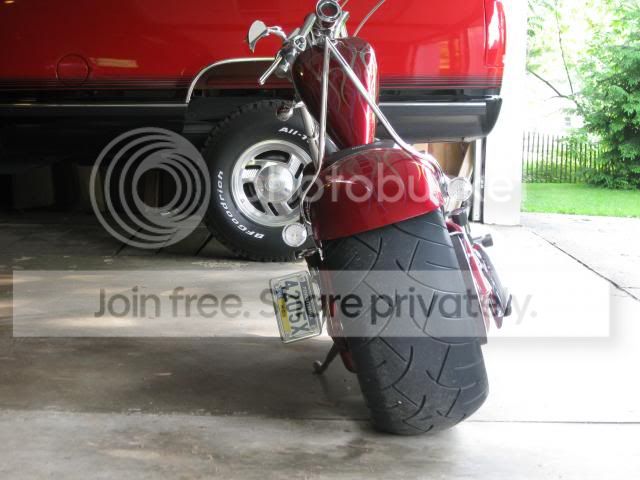
Pics before and after shock adjustment.
Before:
After:
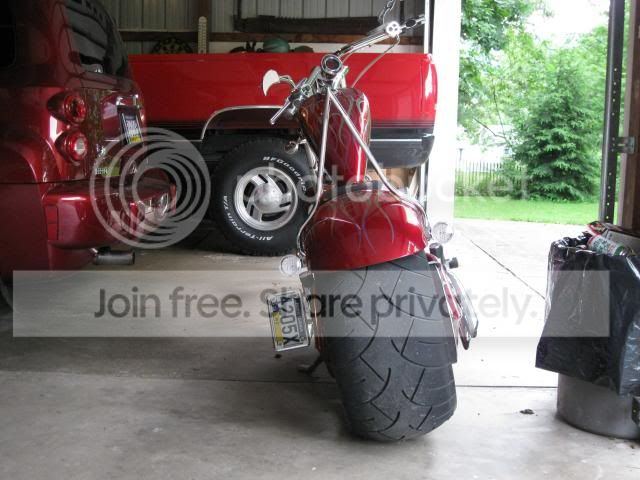
Sometimes it looks like it doesn't lean enough depending where I am parking, got to be careful.
I guess 5 turns on the shock adjustments made a difference. Looking at the pics you can tell the difference in how far the fender is down over the tire.
Before:

After:

Sometimes it looks like it doesn't lean enough depending where I am parking, got to be careful.
I guess 5 turns on the shock adjustments made a difference. Looking at the pics you can tell the difference in how far the fender is down over the tire.
Last edited:

badyellowvette
Active Member
I am just trying to protect the chrome from getting all fucked up.Looks better to me. What a great idea to use that clear rubber piece to protect your garage floor... Might steel that idea
Have to move the hose closer to the end of the foot, the warm weather expands it and it moves.
zenBD
Active Member
Adjusting the stand out (making it longer) did make my bike stand more upright... I adjusted it in stages and watches as it got more and more vertical. I took a photo before and a photo after. You can see for yourselves. Here is before:I can verify that making the adjustable stand longer doesn't do anything. Thinking about lowering a little anyways going to try that before ordering the wedge.
Attachments
-
 173.6 KB Views: 24
zenBD
Active Member
So... I decided to check my stand against a pic I took of it when I first installed it. Badyellowvett said his had moved over time, so I wanted to check mine out. Turns out it did move. I decided to tac weld the stand in back... Won't move now, & you can't see it when installed. I think I'm about done with Ness anything. I've had nothing but problems with their crap... For my Harley and my dog.
Attachments
-
 13.9 KB Views: 21